 En Español
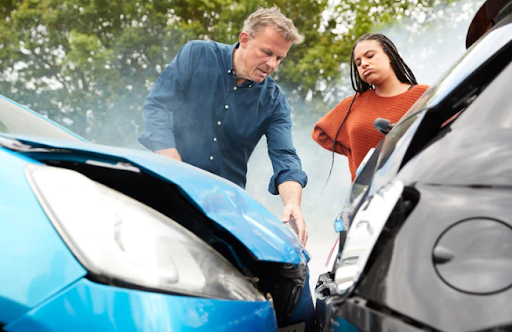
Getting hit by a driver with no insurance is a rough situation. You did everything right, you paid for your own auto insurance, and now you’re stuck with medical bills, car repairs, and missed work.
That’s where Uninsured Motorist (UM) coverage comes in. UM coverage is part of your own auto policy that can help pay for injuries and damage when the at-fault driver has no insurance, or when it’s a hit-and-run and the other driver can’t be found.
This blog breaks down UM coverage in plain language, including what it covers, how it works in Texas, and common mistakes people make after a wreck.
Uninsured Motorist (UM) coverage and Underinsured Motorist (UIM) coverage are parts of your own auto insurance policy. They are designed to protect you when the driver who caused the crash cannot fully pay for the damage they caused. Hence, you need to talk with your own auto insurance company.
Here’s how they work:
In both situations, the issue is the same. The other driver does not have enough insurance to cover your losses. UM and UIM coverage steps in to help fill that gap using your own policy.
Many people refer to this protection as UM/UIM coverage, since the two are closely related and often purchased together.
UM coverage can help cover losses when the at-fault driver does not have insurance or cannot be identified. What it pays for depends on how your own insurance policy is set up, but it is usually split into two main parts.
UM bodily injury coverage may help pay for costs related to injuries, such as:
This part of UM coverage is often the most valuable, since injury-related costs can add up quickly.
UM property damage coverage may help pay for:
Some UM property damage coverage includes a deductible. The amount and details depend on your policy.
UM coverage is not unlimited. It only pays up to the limits listed in your policy. If your losses go beyond those limits, you may still have out-of-pocket costs.
That’s why it’s important to know how much UM coverage you carry and how it fits with your overall auto insurance.
UM coverage is not required in Texas, but auto insurance companies are required to offer it when you buy or renew a policy. If you decide you don’t want UM coverage, there’s an important detail many drivers don’t realize, you must clearly decline it in writing.
Declining UM coverage usually happens when you sign or approve insurance paperwork that specifically says you do not want it. This may include:
Without one of these clear steps, Texas law generally treats UM coverage as part of your policy.
Texas law is designed to protect drivers from being left without options after a crash. Because of that, UM coverage is assumed to be included unless the insurance company can show proof that you declined it.
After a crash with an uninsured or hit-and-run driver, your insurance company may say you don’t have UM coverage. Often, this claim is based on the idea that you declined it at some point.
If the insurance company cannot produce a signed form or electronic record showing that you rejected UM coverage, Texas law may treat your policy as if UM coverage was included. That’s why it’s important to ask for proof and not rely only on what the insurer tells you.
There’s no single right answer, but many drivers choose UM limits that match their liability coverage. This helps provide similar protection whether you cause an accident or are hit by someone who cannot pay.
For property damage, it’s often smart to carry enough coverage to repair or replace your vehicle if it’s damaged by an uninsured driver.
Like any insurance coverage, UM has benefits and limitations. Understanding both can help you decide whether it makes sense for your situation.

Being hit by a driver with no insurance can leave you feeling frustrated and unsure about what to do next. Taking a few careful steps early can help protect your health and make it easier to use your UM coverage later.
After a crash with an uninsured driver, it’s easy to make choices that seem harmless at the time but cause issues later. A few of the most common ones include:
After a crash with an uninsured or hit-and-run driver, it’s common to feel confused about what your insurance will actually cover. What seems simple at first can quickly turn into paperwork, delays, and unanswered questions.
If you were injured in El Paso or the surrounding area, the Law Offices of Michael J. Gopin, PLLC can help you make sense of your UM coverage and what options may be available. We take time to review your policy, explain the process in plain language, and help you avoid mistakes that could affect your recovery.
You don’t have to figure this out alone. Contact the Law Offices of Michael J. Gopin, PLLC for a free consultation. We’re available 24 hours a day and ready to listen.

Michael J. Gopin has practiced law in El Paso since 1987. Even after more than 30 years, he still remembers his first jury case. It was two weeks after receiving his license, when he represented a person whose life had been forever changed after being blinded in a work-related incident...

We are experienced El Paso personal injury lawyers. Give us a call and you’ll be taken care of! (915) 333-3333



 En Español